
Disease outbreaks remain one of the biggest challenges faced by poultry farmers worldwide. Whether managing a broiler farm, layer farm, or commercial poultry farm, maintaining poultry bird health is essential for achieving better growth, higher productivity, and maximum profitability.
Poultry birds are vulnerable to various bacterial, viral, and environmental diseases that can affect growth performance, feed efficiency, egg production, and overall flock health. Understanding these diseases and implementing preventive measures can help farmers protect their investment and maintain healthy poultry birds.
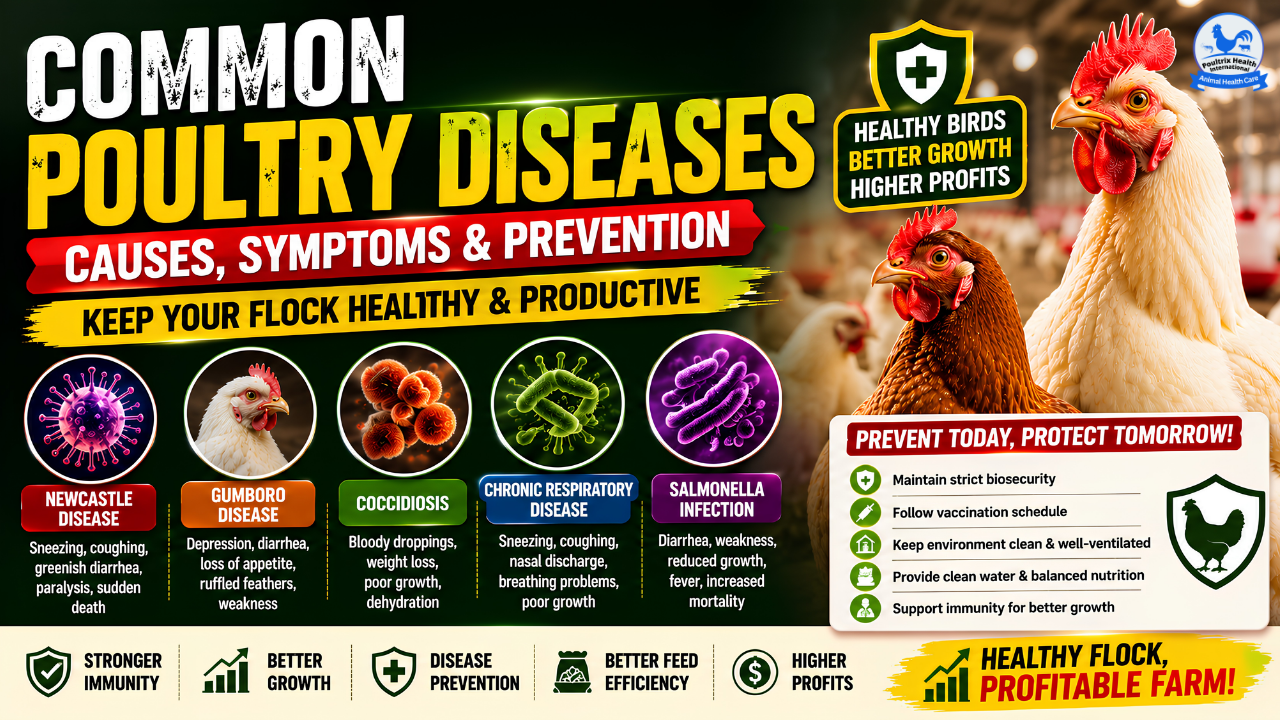
Newcastle Disease
Newcastle Disease is one of the most common viral diseases affecting poultry birds. It spreads rapidly and can cause severe losses if not controlled.
Common Symptoms
• Respiratory distress
• Sneezing and coughing
• Twisted neck
• Paralysis
• Reduced feed intake
• Sudden mortality
Prevention Tips
• Follow a proper vaccination schedule
• Restrict farm visitors
• Maintain strict biosecurity
• Isolate infected birds immediately
• Disinfect poultry houses regularly
Early prevention is critical because Newcastle Disease can spread quickly through an entire flock.
Infectious Bursal Disease
Also known as Gumboro Disease, this viral infection mainly affects young poultry birds by damaging their immune system.
Common Symptoms
• Depression and weakness
• Loss of appetite
• Diarrhea
• Feather ruffling
• Increased mortality
Prevention Tips
• Vaccinate birds according to veterinary recommendations
• Maintain proper hygiene
• Reduce stress in young birds
• Provide balanced nutrition
Healthy birds with stronger immunity are better able to withstand disease challenges.
Coccidiosis
Coccidiosis is a common intestinal disease caused by parasites. It can significantly affect poultry growth and feed conversion efficiency.
Common Symptoms
• Bloody droppings
• Weight loss
• Reduced growth
• Weakness
• Poor feed utilization
Prevention Tips
• Keep litter dry and clean
• Avoid overcrowding
• Maintain proper ventilation
• Follow preventive health programs
• Ensure birds receive adequate nutrition
Good litter management is one of the most effective ways to control coccidiosis in poultry farms.
Chronic Respiratory Disease
Respiratory diseases are common in poultry farms with poor ventilation and environmental stress.
Common Symptoms
• Sneezing
• Nasal discharge
• Breathing difficulties
• Reduced weight gain
• Poor feed conversion
Prevention Tips
• Improve ventilation
• Reduce dust levels
• Maintain proper stocking density
• Keep drinking water clean
• Follow strict sanitation practices
Healthy environmental conditions significantly reduce respiratory disease risks.
Salmonella Infection
Salmonella is a bacterial disease that affects both poultry birds and food safety.
Common Symptoms
• Diarrhea
• Weakness
• Reduced growth rate
• Increased mortality
Prevention Tips
• Maintain excellent farm hygiene
• Use clean feed and water
• Control rodents and pests
• Follow biosecurity measures
• Regularly disinfect poultry facilities
Preventing bacterial contamination is essential for maintaining flock health and product quality.
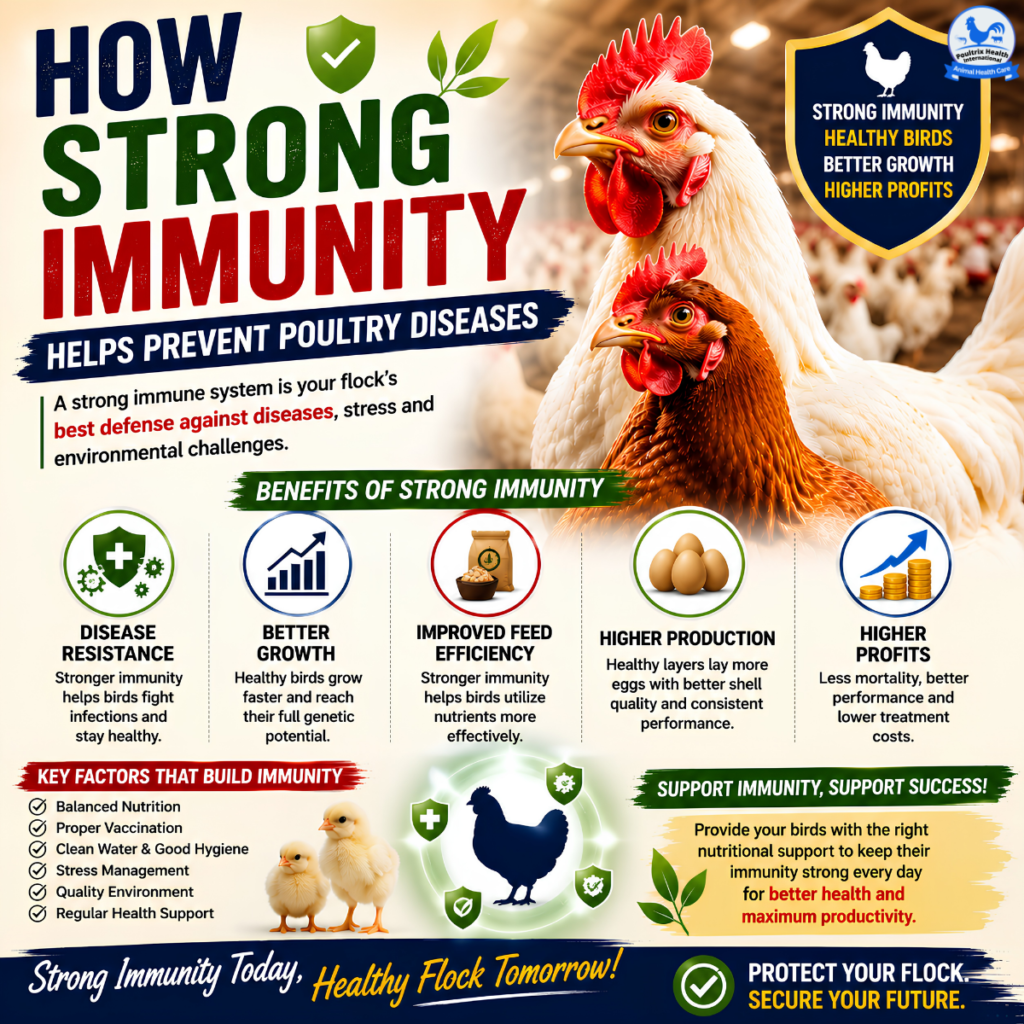
How Strong Immunity Helps Prevent Poultry Diseases
Bird immunity plays a major role in disease prevention. Poultry birds with strong immune systems are more capable of resisting infections and maintaining productivity during stressful conditions.
Key factors that support bird immunity include:
• Balanced nutrition
• Proper vaccination
• Clean drinking water
• Effective biosecurity
• Good environmental management
• Nutritional supplementation
Strong immunity reduces disease risks and supports better growth performance throughout the production cycle.
Supporting Better Growth and Health in Poultry Birds
Healthy birds grow faster and utilize feed more efficiently. During periods of stress, environmental challenges, vaccination, or disease pressure, poultry farmers often provide additional nutritional support to maintain bird performance.
Bird Safe Total can be included as part of a comprehensive poultry health management program to support bird immunity, improve overall health, and help maintain optimal growth performance. When combined with proper nutrition and good farm management practices, Bird Safe Total can contribute to stronger and more productive poultry flocks.
Benefits of supporting bird health include:
• Better growth rates
• Improved feed conversion
• Stronger immunity
• Reduced mortality
• Enhanced flock uniformity
• Increased farm profitability
Conclusion
Poultry diseases can significantly impact poultry farm productivity and profitability if not properly managed. Common diseases such as Newcastle Disease, Gumboro Disease, Coccidiosis, Respiratory Disease, and Salmonella can cause serious challenges for poultry farmers.
The best approach is prevention through strong biosecurity, vaccination, proper nutrition, clean water, and effective farm management. Supporting bird health with quality nutritional solutions such as Bird Safe Total can help maintain stronger immunity, promote better growth, and improve overall flock performance.
Healthy poultry birds are the foundation of every successful poultry farm, and investing in disease prevention today leads to better productivity and profitability tomorrow.
